Prop Trading or Your Own Money? How to Choose the Route That Fits You
4 min read · last fact-check 2026-07-25
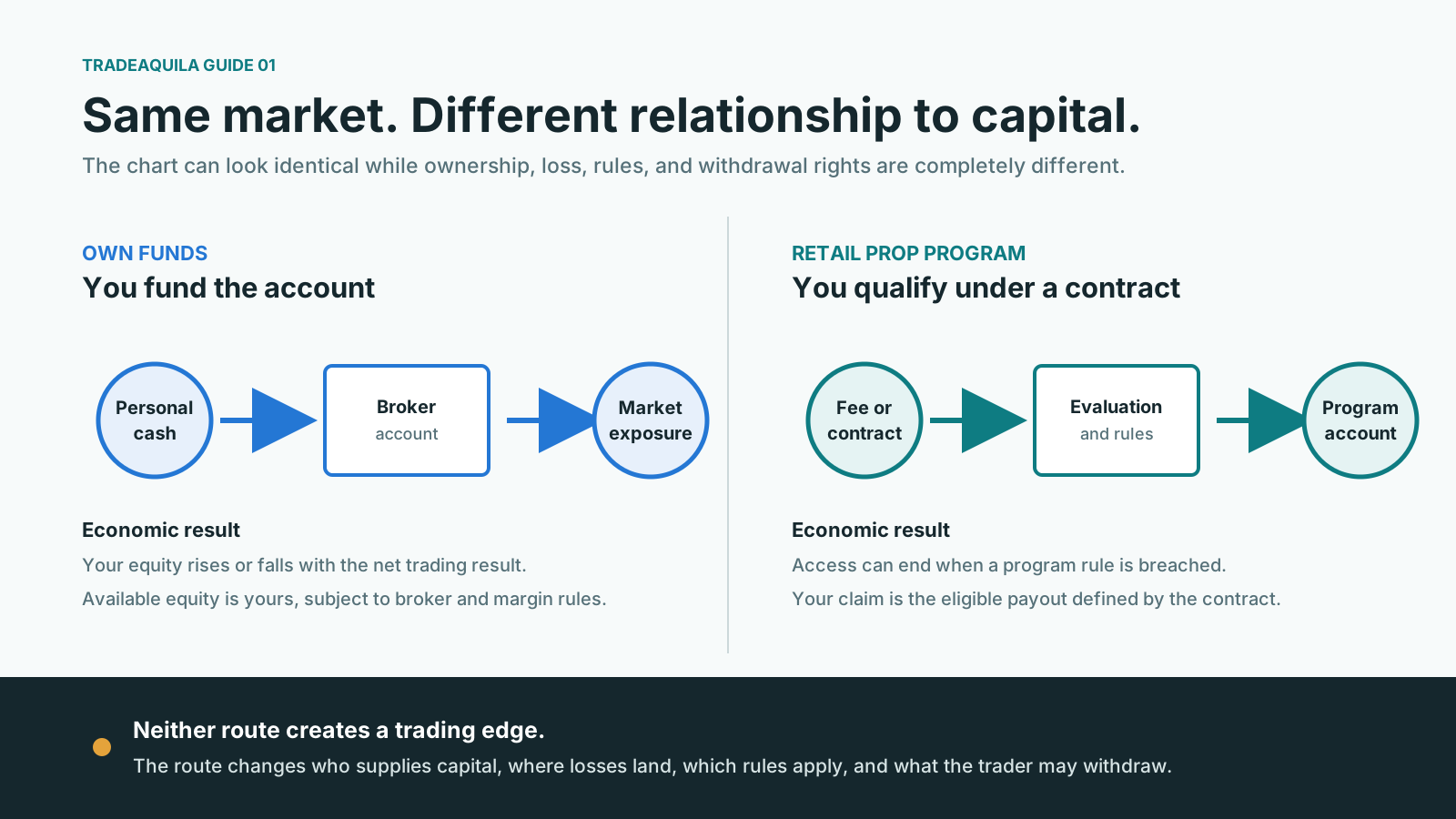
Two traders can take the same position under completely different economic realities. One trades money deposited with a broker — every gain and loss changes their own balance. The other trades through a prop program — the displayed account is much larger, but they operate inside a simulated environment, a fixed drawdown allowance and a contractual payout arrangement.
Short answer: A prop program can reduce the personal cash initially exposed, but it replaces capital freedom with program rules, qualification costs and reliance on the provider. Trading your own funds gives you control and a direct claim on your balance, but your real money absorbs the losses. A trader without a tested process may not be ready for either.
The displayed balance is not your risk budget
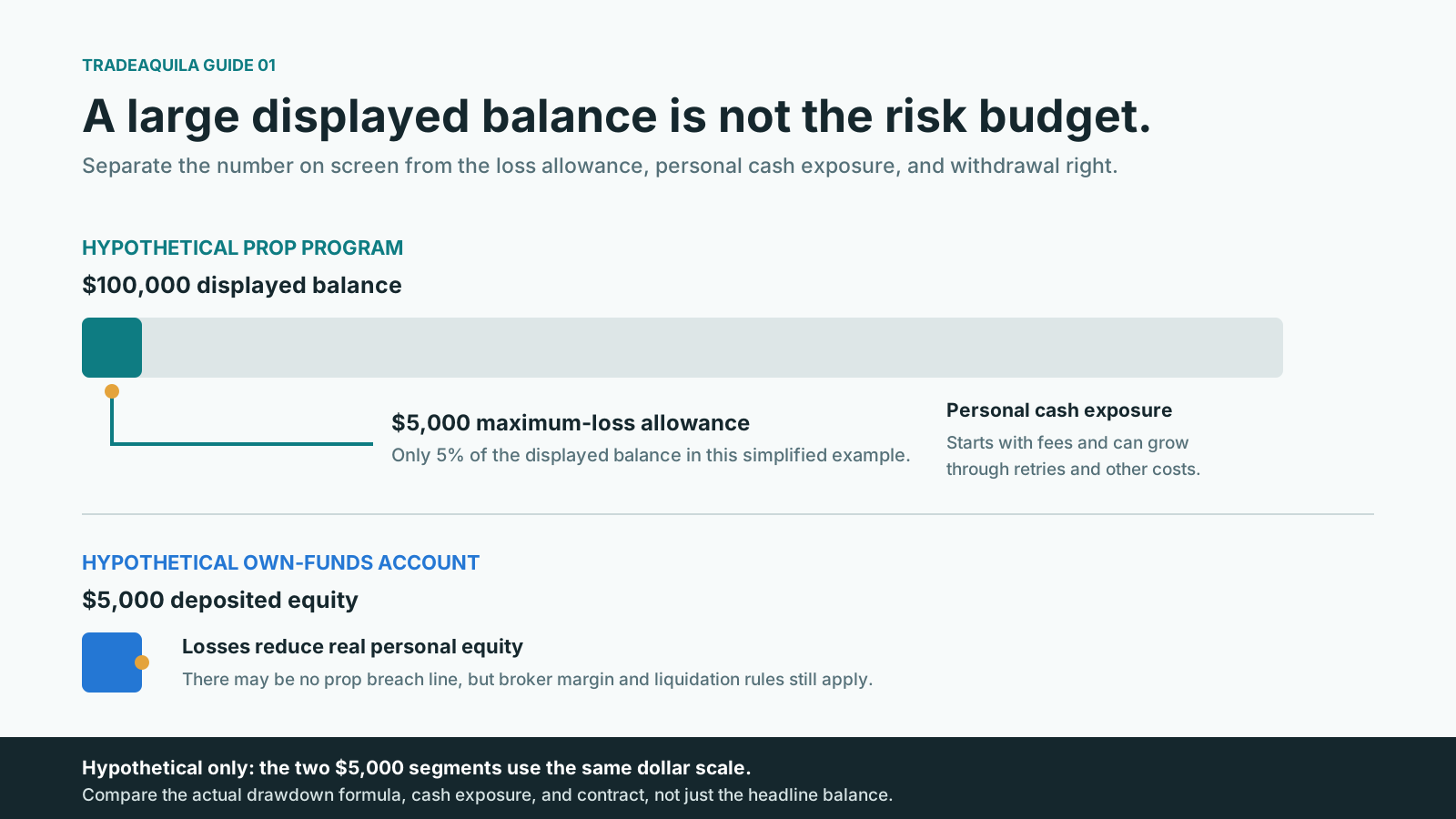
A $100,000 prop account with a $5,000 maximum-loss limit gives your strategy $5,000 of room, not $100,000. Always separate four amounts:
- Displayed balance — the number on the platform.
- Loss allowance — the decline permitted before a rule or margin event triggers.
- Personal cash at risk — fees, resets, subscriptions, or your deposit.
- Economic claim — what the contract actually lets you withdraw.
"Funded" is provider-specific: FTMO states its accounts use fictitious capital in a simulated environment with real rewards calculated from the results; Topstep describes simulated stages before any live account. A real payout does not mean your trades reached a live market — read the contract.
When each route may fit
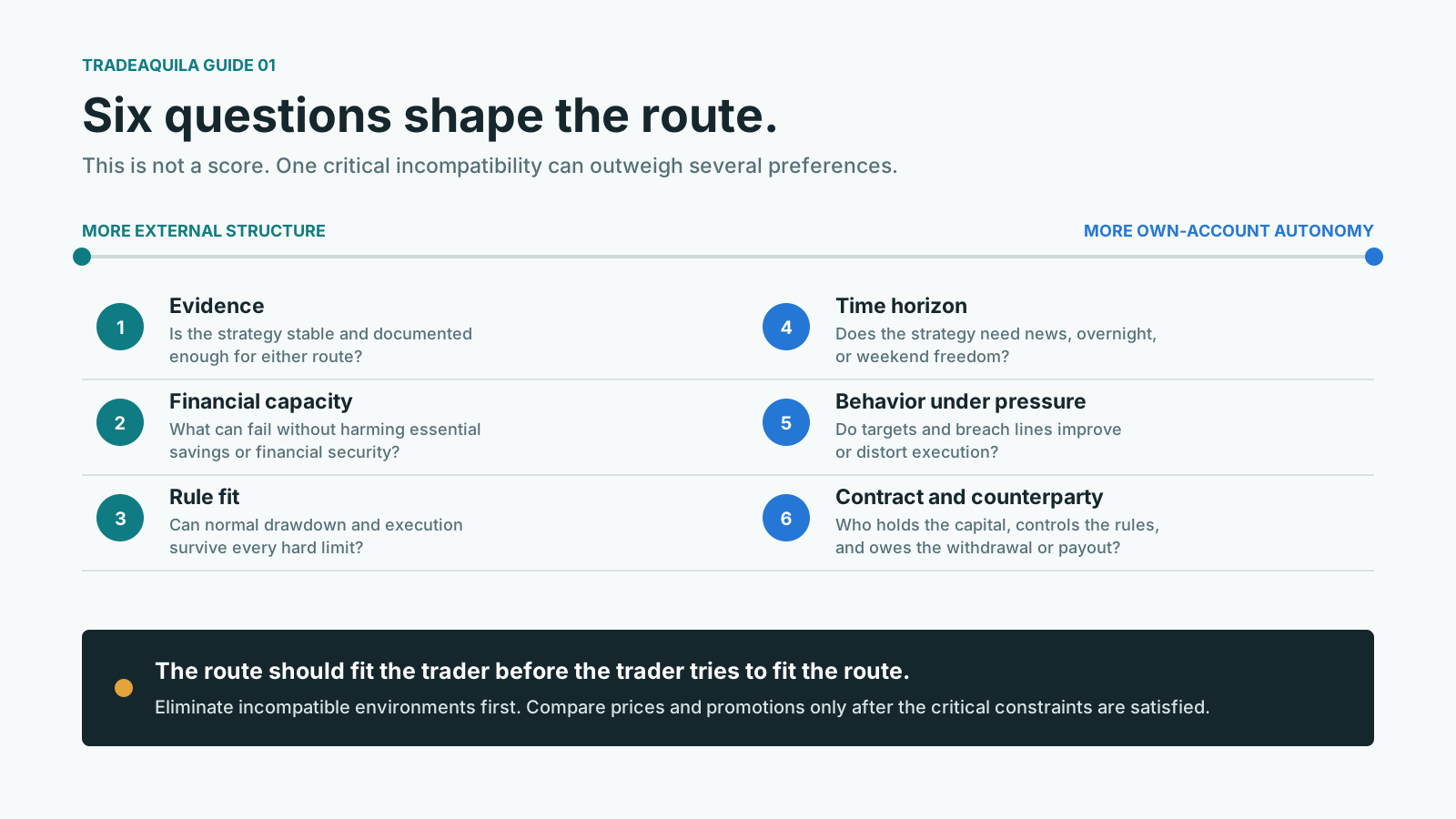
A prop route is worth investigating when: your strategy already has evidence behind it (drawdown, losing streaks, cost sensitivity measured); it fits the program's rules without distortion; the total cost of attempts and resets is affordable; hard external limits genuinely improve your execution; and you accept provider and contract risk (simulated vs live stages, payout conditions, rule changes).
Your own funds may fit when: you have genuinely disposable risk capital; your strategy needs autonomy (news, overnight or weekend holds, wide stops, hedging, compounding); you want direct control over withdrawals; and you can enforce your own limits — freedom without self-imposed stops is just permission to keep losing.
Neither structure creates discipline. It only changes where discipline is tested: a prop target can force trades your strategy would never take; real personal money can cause hesitation and early exits.
Style is a hard constraint, and price is not the fee
Check your strategy against the environment before comparing brands: intraday strategies are sensitive to daily-loss formulas and transaction costs; swing strategies to overnight rules, financing and trailing drawdown on open positions; EAs to automation permission, order-frequency limits and disconnection behavior.
Then compare twelve-month economics, not the first payment: evaluation fees, resets, activation, data, platform, spread and the provider's profit share on one side; spread, commissions, financing, slippage and tax on the other. Model three scenarios — expected, difficult, and operational failure — to see where each route concentrates risk.
The bottom line
The better route is the one that preserves your strategy's valid behavior, keeps total losses within what you can afford, and remains understandable in a difficult month — not just a winning one. Choose the structure only after understanding the trader. The full guide covers the contract questions, five worked trader profiles and a six-step decision process.
Educational content, not investment advice. Provider terms and protections change — verify current documentation before any purchase.
Read the full article — 15 min