CFD Prop or Futures Prop? How to Choose the Funded Route That Fits
4 min read · last fact-check 2026-07-28
Two traders can both say they "trade the Nasdaq through a prop firm" while using very different instruments. One trades a provider's US100 contract on MetaTrader — size in lots, quotes from the provider's environment, spread and financing in the result. The other trades NQ or MNQ futures — size in whole contracts, exchange-defined tick values, a contract that expires. Both may start simulated; both may earn real payouts; neither owns the balance on the screen.
Short answer: A CFD-funded program may fit a trader who already works with forex, rolling indices, flexible lot sizes or MetaTrader automation. A futures-funded program may fit a trader who values standardized exchange contracts, centralized price discovery or order-book tools. The program's rules can matter more than the instrument label in either case.
Two market structures, two relationships
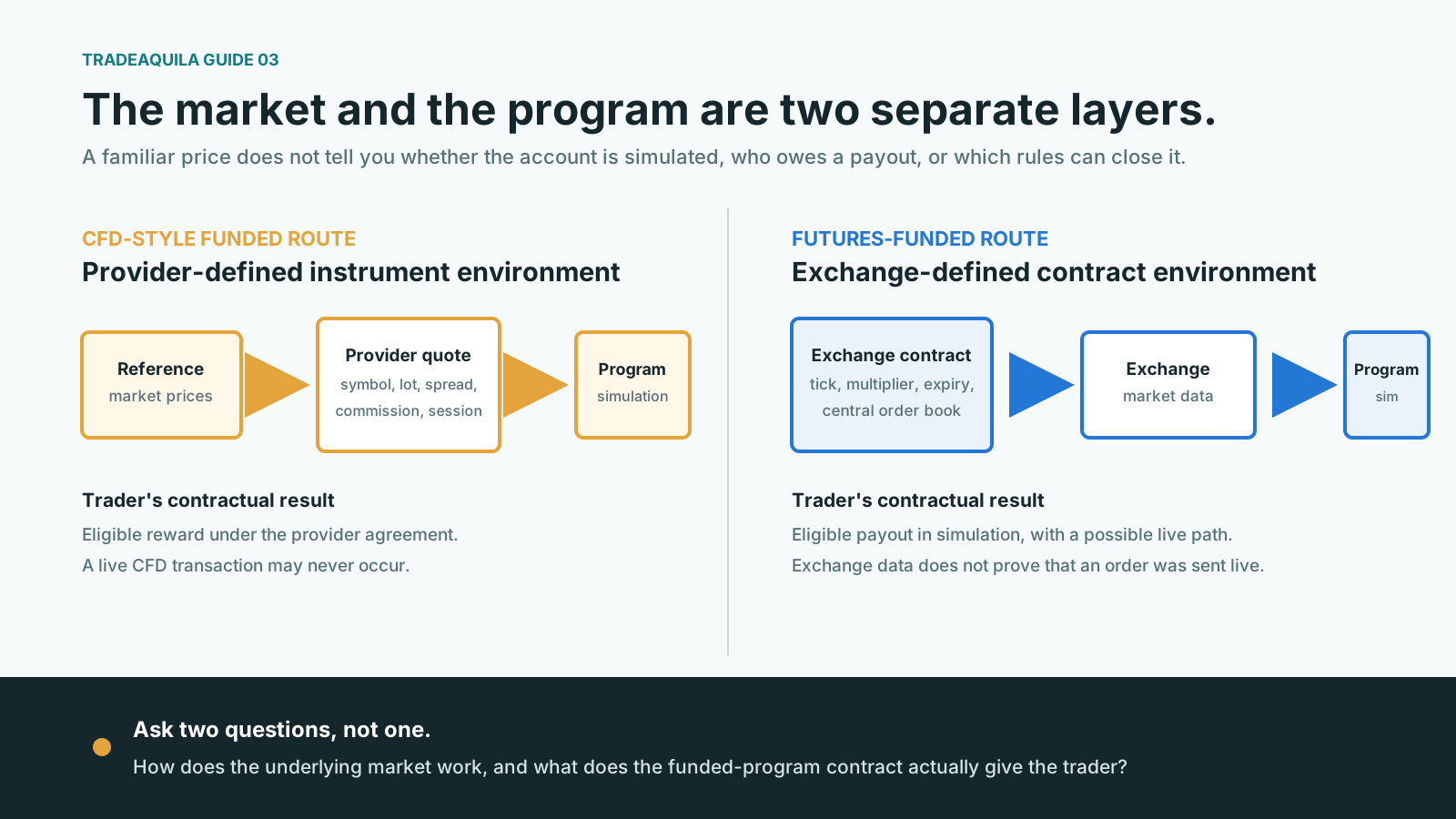
A CFD is an over-the-counter product: the provider manufactures the contract and supplies the tradable price — there is no universal CFD order book, and specifications differ between providers. A futures contract is standardized by an exchange, with centralized price discovery, real traded volume and market depth.
But be precise about what a simulated program changes: exchange regulation does not automatically travel through the simulation. A futures evaluation can use real exchange data while your order never reaches the exchange — and the payout is owed by the evaluation company under a commercial contract, not by the exchange. Always identify the legal entity that owes the payout, in both routes.
The numbers that actually decide it
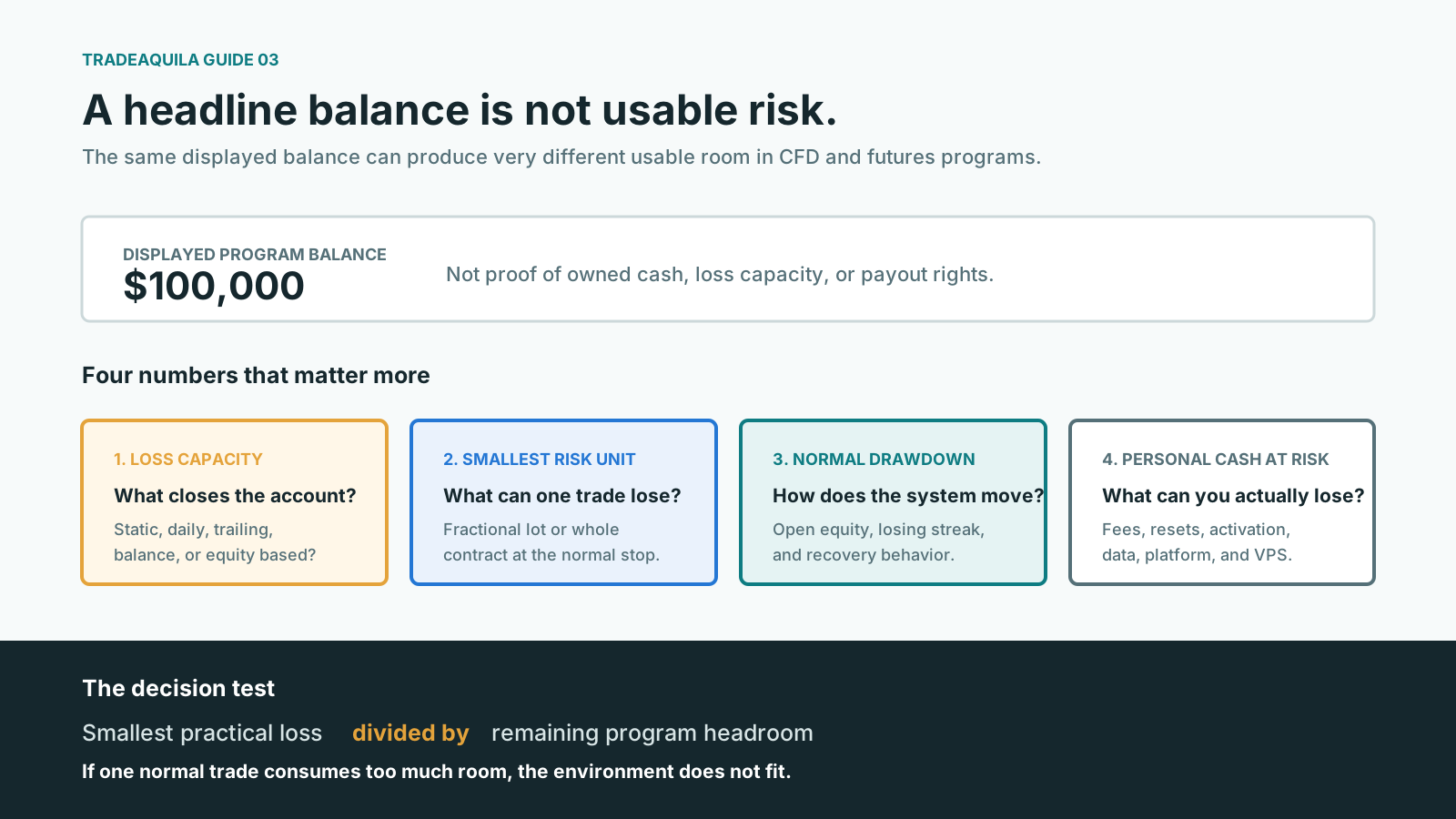
A $100k CFD account and a $100k futures account are not comparable capital. Compare four operational numbers instead:
- Loss capacity — the amount and formula that can end the account (static, trailing intraday, trailing end-of-day, daily reset time zone).
- Smallest practical risk unit — CFDs allow fractional lots, so a normal stop can be sized finely; futures move in whole contracts (Micros help: MES = $1.25/tick, MNQ = $0.50/tick) but one tick can still be large against a tight trailing limit.
- Normal strategy drawdown — including open-equity swings, measured against the program's formula.
- Personal cash exposure — fees, resets, activation, subscriptions, data, platform.
Practical differences that filter fast
- Holding period: many futures programs require daily flattening even though the exchange trades ~23h — a multi-day swing system is incompatible. CFD programs vary by account type (swing vs standard).
- Expiry: futures expire and must be rolled; rolling CFDs don't, but carry overnight financing instead.
- Platform: CFD programs usually mean MetaTrader/cTrader and the existing EA ecosystem; futures programs mean DOM/order-flow platforms, exchange data plans and their own APIs.
- Fills: a simulated futures program still needs a fill model — exchange data is an advantage, not a promise about your simulated queue position. Several providers explicitly prohibit exploiting unrealistic simulated fills.
- Costs: CFD = spread + commission + swap; futures = commission + exchange/clearing fees + data. Model twelve months including resets — pass-first-try is only one scenario.
Choosing
Pick the route whose instrument produced your evidence. An EURUSD EA validated on MT5 CFD feeds maps naturally to a CFD program (after testing the provider's symbols, limits and drawdown formula); an order-flow scalper who reads volume and the book needs futures data that a CFD chart simply doesn't carry. If you can't rebuild the program's loss formula yourself from its documentation, don't buy the evaluation.
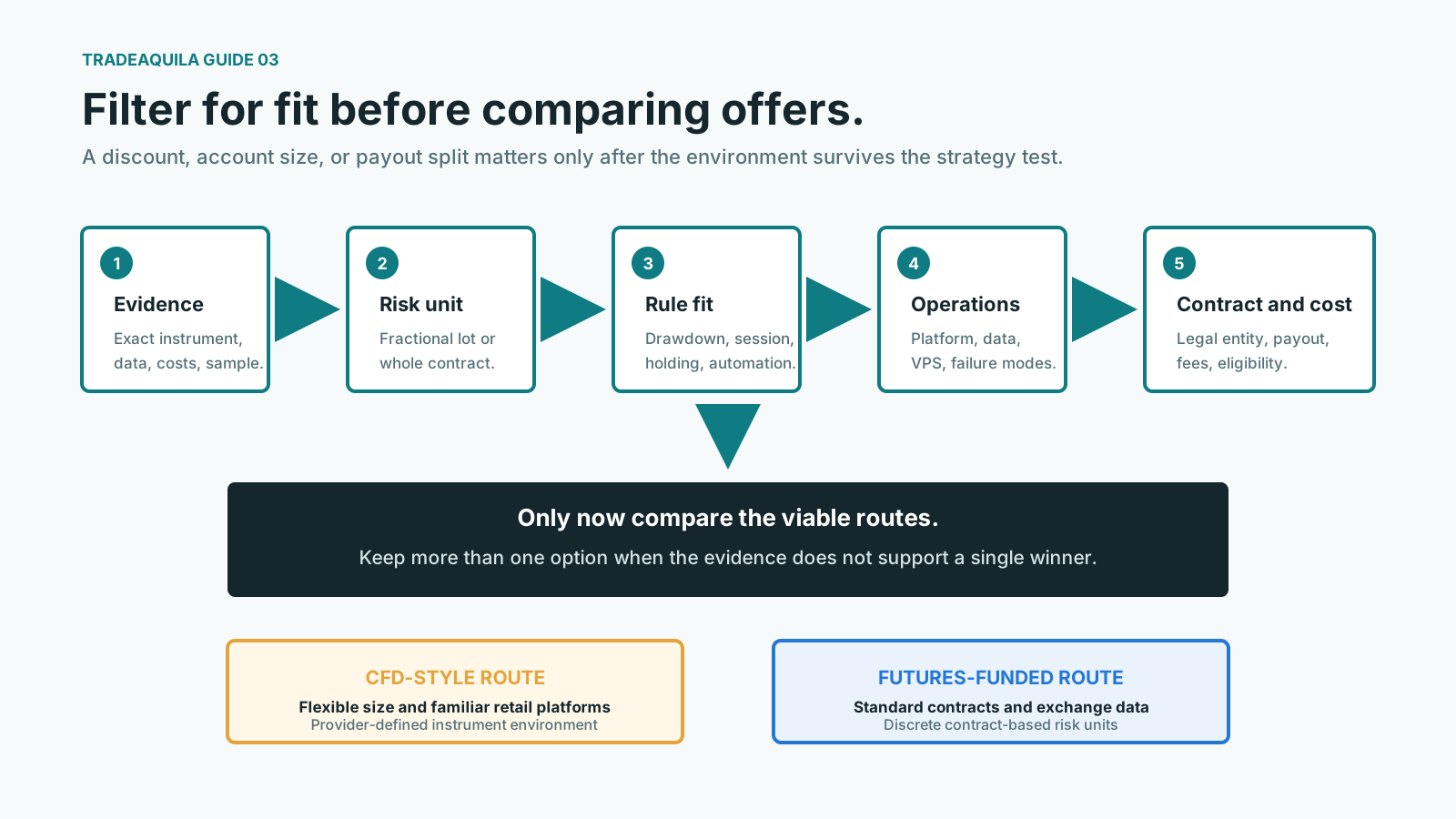
The full guide adds the complete comparison table, worked examples, a seven-step decision process and a 20-question provider due-diligence checklist.
Educational content, not investment advice. Provider rules and terms change frequently — verify current documentation before any purchase.
Read the full article — 18 min